Life Lessons from a Cabbie

Taxi

It was in a university English seminar that I first learned about The Arabian Nights’ Entertainments. My professor told us these Orient tales were used by Western writers in the eighteenth century as fantastical narrative forms to comment on their own domestic circumstances. Orient tales like Nights were then abridged into children’s books and imbued with bourgeois morals designed to educate young readers on how to be good, upstanding Europeans.

I don’t drive, and living in Toronto I’ve been happy to take public transit wherever I go. Yet my family doctor is in Oakville, so when I need to see her I go home for the weekend and take a cab to my appointment. It was the day after lecture on Nights when I found myself in a cab with a driver who told me he was from Turkey.

He asked about me. I told him I was graduating from university in June.

“You are entering your donkey years,” he said sagely.

I thought I had misheard him, but when I saw him looking at me through the rear-view mirror, eyes smiling, I realized I hadn’t. I asked him what he meant, and he told me this story.

Once upon a time, there lived a donkey, a dog, a monkey, and a human. The donkey, dog, and monkey each had a life span of forty years while the human’s was only twenty. Yet each animal had their unique grievances. The donkey was weary of a life spent working hard for others and being treated poorly for little compensation. The dog was weary of guarding his property and spending its days barking to protect it. The monkey was weary because all anyone did was make fun of how silly it was. The human had no grievances because his life was easy and pleasant, his only complaint being that it was so short.

Watching from above, Allah saw their suffering and transported them to Heaven. He listened to the donkey, dog, and monkey’s complaints in turn before turning to the human.

“The other animals say they wish their lives were shorter, but your life is good. What then is your grievance?”

“Nothing. I only wish my life were longer,” the human replied.

Thinking for a moment, Allah announced a solution.

“The donkey, dog, and monkey are all weary of their lives and wish them to be shorter, so I will cut their lives in half and give these extra years to the human.”

The cabbie said that I was now, at twenty-one, one year removed from my human years and had now entered my donkey years. My human years had been easy, carefree, and pleasant. Upon graduating, my donkey years would involve taking jobs where I worked hard for long hours with little pay as I climbed the career ladder. When I turned forty I would enter my dog years, where I’d peak professionally and would bark orders at people beneath me to safeguard the success I had achieved in my twenties and thirties. When I turned sixty, I would spend the rest of my life in my monkey years, my grandchildren making fun of me for being so silly.

“In all my life, I have never met anyone who was able to disprove my story. Can you?” He asked. I said I couldn’t – he was exactly right.

When we arrived at the clinic I told him I would share his story, and did so with my family and friends. Since I’m sharing it here, you too can spread the wisdom I learned from a cabbie.

This article appeared online at blogut.ca here

Band Aid: A Love Song for First Aid Kit

fak2

Yes, they’re Swedish. No, they don’t sound like ABBA.

Sisters Klara and Johanna Soderberg make up the remarkable folk duo First Aid Kit, singing their bittersweet, narrative-rich songs in tight, country-twanged harmonies. The pair skyrocketed to fame in their teens as an online sensation with their polished cover of Tiger Mountain Peasant Song in 2008. The sisters demonstrated their serious artistic chops with their follow-up album The Big Black and the Blue (2010), completed while Klara was still in high school. They followed this gem with The Lion’s Roar (2012), its lead single “Emmylou” noted as one of the top 10 singles of the year by Rolling Stone.

“Lots of people write storytelling songs…set to acoustic music and do pretty harmonies, but First Aid Kit transcends that cliché. Their songs sound like they’ve gone away and seen too much and come back tired but still alive”, writes Tavi Gevinson in Rookie.

Klara’s clear, voice-throwing lead vocals and finger-picking guitar lines are complemented by older sister Johanna’s rich harmonies and accompaniment on the keyboard and autoharp. Upbeat tempos drive mature, sometimes melancholy lyrics. Similar to how the 22-year-old T.S Eliot convincingly took on the persona of a self-conscious middle-aged man in The Lovesong of J. Alfred Prufrock, the sisters (22 and 25 respectively) belt out tales of female characters coping with adultery (Tangerine), struggling to love again (Blue), and searching for themselves (Waitress Song) with a startling authenticity. What’s more, country music’s familiar trope of celebrating faith in God is both thoughtfully and provocatively undermined by the sisters in the songs Hard Believer and Heaven Knows.

“We want our music to work as a means of consolation, as a way of making life a bit more bearable for people. A First Aid Kit for the soul,” the sisters explain of their group’s name.

Graduating from the minimalism of their début album (recorded in Johanna’s bedroom), their music’s wall-of-sound lushness soars in their third studio album Stay Gold (2014), proving the depth and versatility of the sisters’ talents. Together, they’re at the forefront of a revival in folk music appreciation for a new generation.

So go ahead. Take a chance on these Swedish sisters.

This article appeared on BlogUT here.

His Story: My Family and the Great Wars

Map_Sicily

It’s during the holidays when families tell their stories. The cold and snow (or this year, rain) lure people indoors, silent nights filling with tales of those both present and long passed.

Having recently completed a university course on the military’s role in shaping modern society, I wanted to learn more about the impact war had upon my own family.  Over the course of a single one-hour conversation with my grandfather (we call him Nonno), I heard the story I share with you today.

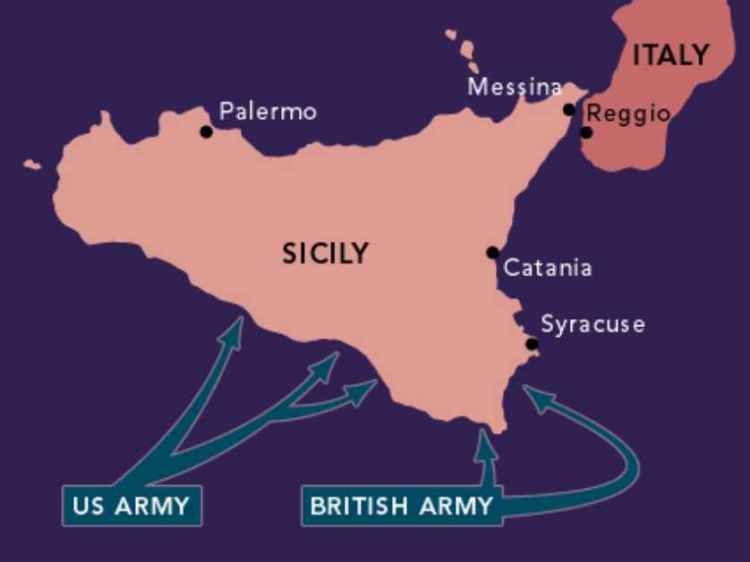
My grandfather was sixteen when Allied forces invaded Sicily.

His North-Eastern hometown of Francavilla, isolated from the combat raging in the South, was used by occupying Fascist and Nazi forces as a transportation hub for arms, food, and materiel. It was the Nazis that my grandfather spoke of as most cruel. They killed women and children who refused to part with scarce rations, and caged residents of entire neighborhoods without food or water in livestock pens watched over by machine-gun wielding guards. Fascist forces accosted my grandfather as he picked oranges in his family’s orchard, demanding to know his age and if he was a defector masquerading as a civilian, a practice which grew more common as the war waged on.

The Allies announced their presence with swiftly-passing planes which bombed transport vehicles and killed nearby civilians with each drop. Despite the carnage, the attacks on Axis supply lines were effective – my grandfather described pairs of patrolling Fascist soldiers forced to share one rifle between them. Fleeing Germans passed through their town towards ships bound for the continent, blowing up bridges and planting landmines in their wake. Nazi reinforcements in the Mediterranean were met by Allied Jeeps and machine guns in their attempts to reach the Sicilian coast.

Frightened of the bombings and German scouts, my grandfather, his family, and crowds of townspeople hid in an abandoned train tunnel in the mountains, leaving its safety only to scavenge for food and game in the hills.  A dead man had been sprawled on a sidewalk when the town made its flight; when they returned four days later, certain the new forces they saw in town where Allied and not Axis, the body had remained untouched and rotting.

When the Allies arrived they swept Francavilla for remaining Axis soldiers, finding one Nazi in a countryside shack. The town’s cemetery, used by Axis forces to store drums of gasoline, was set ablaze. Pamphlets were distributed calling for hiding Fascists to surrender at the local church, the crowd that congregated there then taken prisoner. American GIs led POWs on a side road towards an Allied base outside of town. Crossing one of the town’s few remaining bridges, a landmine was triggered and every man on it was killed.

My grandfather concluded his story here, adding that his family was lucky not to have lost anyone or have been solely dependent on rations during that time, having a farm and livestock to supplement the 150 grams of bread allocated to each citizen per day.

He went on to speak of his father, a World War One veteran. Having immigrated to Montreal in the early 1900s, his father answered his nation’s call to arms and returned to Sicily to serve in a volunteer battalion known as the Arditi (“daring ones”) on the Western Front. These troops were responsible for breaching enemy lines, paving the way for a broader infantry advance to follow. According to sources, the Arditi “were successful in bringing in a degree of movement to what had previously been a war of entrenched positions. Their exploits on the battlefield were exemplary and they gained an illustrious place in Italian military history.” They were the most elite force in the Italian army. Some historians consider them to be the modern world’s first true military special forces. Pretty neat.

My grandfather told me the story of the special forces mutiny which arose following a territorial advance that had quickly been reclaimed by the German line. Exhausted and only just returned to camp from their effort, their commander informed them of this news and demanded they immediately return to the Front. A protest followed, the commander quelling it by lining the battalion up and executing half the men at random. The survivors were forced back to the front by their commander, who stood behind them with a pistol trained to their backs. The rest of the unit was killed in a shelling attack, my great-grandfather surviving under the body of a comrade.

On the fiftieth anniversary of the Italian victory in WWI all living soldiers who had fought for at least six months in the war were awarded the order of Cavaliere (knight) in recognition of their service to the Italian Republic, including my great-grandfather.

A sample Cavaliere di_Vittorio Veneto Diploma. My great-grandfather's was issued July 30 1947 under the name Antonio Mazza.

A sample Cavaliere di Vittorio Veneto Diploma. My great-grandfather’s was issued under the name Antonio Mazza.

I highly encourage you to ask your elders about how war has impacted their personal history. You never know what stories you’ll keep to commemorate for another generation.

This article appeared on BlogUT here

The Best French-Language Films on Canadian Netflix

Netflix Canada boasts an impressive roster of foreign language films. But you already knew that (right?).

I watch French films to keep up my grasp on the language, which having left Montreal at age 15 I try with some success to maintain at an 8th-grade level. I love French films for their originality (compared to Hollywood’s endless stream of sequels and reboots) and startling array of strong leading ladies. To follow is my list of what I consider to be Netflix’s best, all of which feature English subtitles. In no particular order:

  1. Romantics Anonymous (2010)

Watch two incredibly awkward people who share a passion for chocolate fall in love.

“The tale of two pathologically shy chocolate makers who are meant for each other but are too afraid to connect is a mug of warm cocoa with marshmallow topping that produces a comfy feel-good glow.”- Stephen Holden, New York Times

2. The Intouchables (2012)

A runaway hit in France and abroad, this film will leave you with all the feels and warm-fuzzies.

“In this sentimental feel-good saga of an ultra-wealthy quadriplegic and the petty criminal who becomes his caretaker, the chemistry between the two lead actors goes a considerable way toward elevating the broad-strokes culture clash. That’s crucial to a film that is, in essence, a love story.” Sheri Linden, Los Angeles Times

3. The Snows of Kilimajaro (2011)

As one critic on Rotten Tomatoes put it, the film “Contains no traces of Hemingway whatsoever. Good.” A subtly brilliant movie revealing the inner complexities of a seemingly cut-and-dry decision, the film forces the viewer to challenge their values in asking themselves how they would have reacted in the same situation.

“This socialist-friendly film examines the dilemma a former union rep faces when he is robbed by an ex-coworker… He and his wife must decide whether arresting the unemployed Christophe is the right thing to do, especially when they learn that he supports two abandoned younger brothers.”- Jordan Mintzer, The Hollywood Reporter

4. The Yellow Eyes of Crocodiles (2014)

Based on the best-selling novel of the same name, a strong female cast makes this smart film shine.

“Two sisters are living very different lives and have nothing in common. Joséphine is a dowdy historian whose husband takes off to Kenya to breed crocodiles with his mistress and his wife’s money. Left struggling to raise two teenagers, Joséphine’s life could not be more different to her beautiful sister, Iris, who is rich, idle and bored. After becoming trapped in a lie of her own telling, Iris turns to her estranged sister and convinces her to write a historical romance novel. Iris will take the credit, while Joséphine will take the money. What could go wrong?”- Alliance French Film Festival website

5. Paris Follies

A shepherdess falls for an attractive younger man and follows him to Paris. While there, she falls for an attractive older man. Her husband Xavier then follows her to Paris, hoping to save their marriage.

“Brigitte leaves her husband for a weekend affair in Paris. Far from a lavender fantasy full of late middle aged romantic clichés, the resulting film is rich in meaning and unexpected emotional insights.”- Jason Di Rosso, MovieTime, ABC Radio National

6. Amour (2012)

If you’re not crying for two hours straight at this unflinchingly beautiful, intimate, heartbreaking portrait of love at the end of life, you are a heartless monster.

“Amour will, I believe, take its place alongside the greatest films about the confrontation of ageing and death.” -Philip French, The Guardian

7. Amelie (2001)

Classic movie, classic soundtrack. Most people’s introduction to “la belle monde” of French cinema.

“You see it, and later when you think about it, you smile.”- Roger Ebert

This article appeared online at BlogUT here.

Concert Review: Stromae

54a79386eacc9_-_elle-01-stromae-h-elh

A crowd of two thousand gathered at TD Echo Beach last night to see the impeccably-dressed, French-singing Belgian electropop superstar Stromae. Until recently, I hadn’t heard of him either.

This changed when I lived with a French Master’s student who introduced me to the “bête de scène” (their term for charismatic showman) and his infectious hip-hop sound. As the New York Times succinctly put it, “his music mingles electronic dance beats with hints of African, Latin and cabaret styles. He sings and dances with long-limbed aplomb; he’s a striking video presence with a flashy and sometimes androgynous fashion sense.”

Listening closely to (or Google translating) his lyrics reveals the deep and often somber subject matter of his songs, with topics ranging from absent fathers, breakups, unemployment, gender stereotypes, social media’s impact on our relationships and, most recently, cancer. However, this does little to stop his fans from dancing like crazy. Stromae’s live vocals and spectacular audio-visual displays are legendary.

The tracks chosen for the concert strayed little from his biggest hits, Stromae likely aware that his Toronto audience would not be familiar with the lesser-known songs in his repertoire. He closed the show with a trippy extended drum solo and an a capella version of “Tous Les Mêmes” showcasing his sheer talent and vocal artistry.

Aware of his Kanye-like, million-selling status in Europe, it was exhilarating to be fewer than twenty feet away from Stromae in this intimate concert venue. As the performance concluded and the crowds dispersed towards the streetcar, all anyone could say of the concert was that it had been “formidable”.

This article originally appeared on BlogUT here.

#UofTfeministstrong: Feminists March in Solidarity Against Anonymous Threats

CO4mWFHWIAEsJNl

 is trending on Twitter following a march against anonymous threats made in blogTO comments against the lives of feminist students and teachers at U of T. A Women’s Studies class at UTM will be cancelled this week following Professor Hae Yeon Choo’s decision to take this time instead for a “moment of serious reflection” on the past and present discrimination against feminists. One student commented on her professor’s decision by saying  “My personal way of protesting against the violent threats would be to go to class. I don’t think we should stand down or miss our education for something like this.”

This opinion was shared by the students at UTSG who rallied along Bloor, Spadina and St. George streets this afternoon. As one spokesperson for the demonstration put it, “Violence that seeks to silence feminist voices cannot and will not succeed in its goals.”

With files from the National Post and CBC.

This article appeared on BlogUT here.

Your Need-To-Know for Students Voting in the Upcoming Election

McGill student vote mob 2011

U of T, did you know you can vote on campus in the upcoming federal election regardless of where you live? No need to travel home to vote!

(First off, check if you are registered to vote. If not, find more information on doing so here.)

As the Elections Canada website states,

  • Advanced polling offices will be open Monday, October 5 to Thursday, October 8.
  • Anyone can use these offices, even if they are temporarily away from their riding (for example, an eligible voter who has moved to a new city to attend university or a student from a different campus).
  • Voting will be by special ballot. Votes will count in the riding where the voter’s home address is located.

At the St. George Campus your poll locations are:

University of Toronto Graduate Student Union
Gym and Records Room
16 Bancroft Avenue
Toronto, ON  M5S 1C1
10:00 a.m.–8:00 p.m.
University of Toronto University—Rosedale Returning Office
316 Bloor Street West
Toronto, ON  M5S 1W5
10:00 a.m.–8:00 p.m.

To vote, you must provide identification showing your home address. Find the full list of accepted documentation here.

As for students living on residence:

  • You can prove your identity with your student ID card.
  • You can prove your address with any document issued by your school that shows your home address.
  • Ask the residence administrator for a Letter of Confirmation of Residence that says you live there. You can use it to prove your address.
  • Happy voting!

This article appeared on BlogUT here

A Note to First Years, from a Fourth Year Student

went-to-bed-with-the-first-girl-since-a-terrible-breakup-i-was-drunk-55903

Howdy, first years.

Channeling my inner psychiatrist, how do you feel? Are you nervous? Or were you like me, anxious to start studying what I loved and none of what I didn’t (math) surrounded by like-minded people you were determined to make your friends?

This is a time of change, self-exploration, and finding your purpose in life. In the end we are all here to be educated to enter the workforce in some capacity upon graduation. This may follow a Master’s or Doctorate degree, an internship, a post-graduate certificate, or simply your newly-minted bachelor’s degree. But this reality is still years away. For now, I digress.

Addressing Common First Year Fear #1: I WON’T MAKE ANY FRIENDS

You know what the great thing about residence is? You’re crammed in tight quarters with people just as afraid as you are! Find someone who seems friendly, introduce yourself, then BE yourself. Everyone is looking for a friend.

For me, Frosh Week was where I meet the people I kept in touch with throughout my degree. No luck at Freshers? You can still make friends in class – just pick someone out, introduce yourself, then strike up a conversation.  No, you will not come across as desperate. Yes, you will make friends this way – I know I have.

Are you a commuter student? I was, and from the faraway land of Oakville at that. If you have not signed up already, attend the Commuter Orientation many colleges host before classes begin. This is a great way to meet people to share your TTC horror stories with. Embrace being a commuter, especially if you live with family – most of us get to come home to a ready-made meal and people who care about us every day. This makes the transition to university life so much easier.

Addressing Common First Year Fear #2: I’M GOING TO FAIL ALL OF MY CLASSES

Some attitude you’re going into U of T with! If you’ve been accepted to this world-class institution, you are doing something right. You will get the first year marks to be accepted into your desired program if you work hard.

What do I mean by this? I mean do the readings and go to class. Period. You (or worse, your parents) are paying for a service, so take advantage of it. Engaging in your courses will help you better understand and remember the information you’ll be tested on. As for tutorials, go to them too. See them as a great way to delve deeper into course material, meet TAs who have your success as their top priority, and get tips on how to ace assignments. If your soul is crusty and jaded, see them as a guaranteed “A” on 10 percent of your course mark just for sitting on your behind and contributing a half-intelligent remark every so often. Whatever your reason for going, just go will ya?

Secondly, figure out what kind of learner you are if you haven’t already. I know I can’t remember things I’ve only read or, heaven forbid, only heard in a lecture. Find what way works best to sear information into your memory, set aside time to do that thing, then DO IT.

Addressing Common First Year Fear #3: WHAT AM I DOING WITH MY LIFE

Good for you for having this existential crisis now rather than after graduating! U of T has a plethora of resources available to help you figure your life out. The Career Centre offers an Informational Interview Database where you can meet with up to four professionals in a field you’re interested in pursuing to pick their brains and build your professional network. There is the Externship Program where you can job shadow an alumnus at their place of work to see the day-to-day activities of the job you may be interested in. There are seminars on writing resumes, nailing interviews, and more. The one hurdle I personally experienced was a lack of internship opportunities available to me through my program – unless your degree specifically requires a co-op to complete your studies, U of T has limited resources to help set you up with one. If you want to intern during your undergrad, you’ll have to arrange it on your own.

Outside of the Career Centre, there are many clubs at U of T you can participate in to test-drive future career paths and build skills outside the classroom. Think you want to be a writer? Try blogUT!

I will end this post with a personal anecdote. I had so much fun at Frosh Week that being unscheduled and alone my first day of classes meant I spent most of the day feeling lonely. I rode the GO train home to Oakville, opened my front door to my parents asking how my first day went, then promptly burst into tears. In the following days I reconnected with friends I’d met at Vic, used the identify-introduce-charm them formula mentioned above on people who quickly became my friends, and fell in love with what I was studying. It has been a wonderful, challenging, crazy ride ever since.

This article can be found at BlogUT here

Try the Veal: San Francesco Foods Review

veal1

The sky opened up and it began to rain as I was walking along Queen Street West, looking for somewhere to eat. Stopping into the first place I saw open, I found myself inside a cozy Italian eatery called San Francesco Foods. Not knowing that the veal sandwich was their specialty (and has been for over 60 years), this is what I ordered. A soft kaiser bun was sliced in two and its insides dipped in red sauce, freshly-fried veal slices placed between.

It was the best veal sandwich I’ve ever had (sorry, Nonna). So began my love for San Francesco’s authentic and delicious Italian sandwiches.

Stellar reviews on Urbanspoon and Yelp support my high praise of this landmark Toronto franchise. Having tried the poutine and their eggplant and meatball sandwiches as well, I can attest that the sammies they serve are both reasonably priced (most are $7.50) and ridiculously tasty. The size of their sandwiches can easily make for two meals, and taste even better the next day.

San Francesco Foods has additional locations at 10 Clinton Street in Little Italy and near Ryerson campus at 736 Bay Street, should you, like me, get a craving for old-fashioned Italian comfort food.

This article appeared at BlogUT here

Strangely Laid Plans: Terry Fallis on how Engineering School Prepared him for Politics, PR and Publishing

torstar-licenced-photo-cropped

On Thursday afternoon Engineering students (and one English major) gathered in the Galbraith Building to hear current Writing Humor instructor at U of T’s School of Continuing Studies discuss his unconventional career path. Following graduation from McMaster’s Engineering program, he went on to hold positions on Parliament Hill, co-founded a Public Relations firm, and is the author of four very funny novels.

Fascinated by science and technology from an early age, Terry described his dabbling with hang-gliders, car engines and hovercrafts, all culminating in his pursuit of undergraduate studies in Engineering. However, while at McMaster he was also President of the university’s Student Union, a position which eventually landed him a gig as part of Jean Chretien’s 1984 Liberal Leadership campaign staff. From then on he never considered a career as a capital-E Engineer. However, he stressed that he continues to think and problem-solve like one.

He showed us PowerPoint slides of the outlines of his novels. They were extremely detailed.

“An engineer wouldn’t build a bridge without a blueprint. Why write a novel without one?”

Contrary to what many have assumed, he does not regret not having “used” his degree in the traditional sense. The ability to analyze emotional situations objectively and act on well-designed plans are all skills he credits to his undergraduate studies, which he says apply to all facets of his varied professional career.

“Do engineers here have to take any English classes?” he asked the group.

An uncomfortable laugh and shifting of seats rippled across the room. He was stunned.

He went on to stress that while it may be tempting to laser-focus your studies towards a particular career path, doing so may lead students to miss exciting opportunities outside of their pin-pointed vision.

“Life is long,” he assured us. “Besides, there aren’t enough engineers in politics. That needs to change.”

This article appeared on BlogUT here.