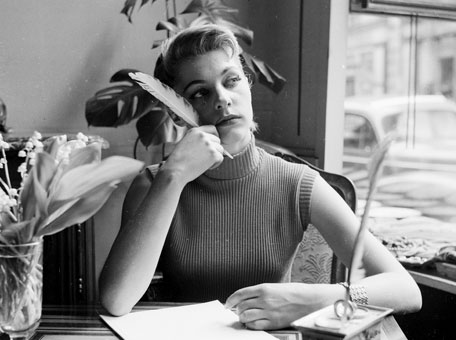
The first U of T alumni event I attended since graduating two years ago was a seminar tantalizingly titled “Writers on Writing.” It quickly revealed itself to be a plug for works created by university alums and a creative writing master’s degree offered through its department of English Literature. However, the afternoon was redeemed by cookies and the following words of writing wisdom offered by Canadian novelist Susan Swan.
On Writing
- Choose a narrator who is like you and not like you so you have room to invent.
- Write the first draft without worrying about language problems or clichés. Being critical too soon is like inviting the food critic to the feast when you’re still chopping the onions.
- Writing fiction that is fairly autobiographical is fine. It’s not fine when you feel obligated to duplicate true experience instead of asking the writer’s question: what does the story need? All stories go through a transformation whether they are inspired by actual events that happened to the writer or come out of pure invention. Play around with your history to make it authentic to your story.
- It’s a cliché to say ‘write what you know.’ Write about what most deeply obsesses you and what you know will come into play organically.
- Keep the reader in the moment of the story as it unfolds so the reader and the story’s characters go through the same experiences together. Too much explaining or summarizing will deaden the story and insult the reader’s intelligence.
- Try role-playing your dialogue with a friend to see if you captured the way people actually talk to each other. Dialogue between characters without the author’s interference is the easiest way of ‘showing, not telling.’
- Carol Shields says writers write sketch scenes when they need to ‘thicken’ their plot and introduce the next scene naturally. This can be done by using the immediacy of dialogue or by adding sensory details of setting, facial expressions, gestures, clothes and more. Letting the reader know what the character is thinking also helps thicken a scene. This can be done through free, indirect style which removes tag phrases such as ‘she thought’ and simply puts the thought on the page without attributing it to a character.
- “A short story is a piece of writing under 60 pages” – Alice Munro
Questions for Revising
- Is the opening the best possible opening? Or is it a fish-head, something the writer writes to get started?
- Does the structure of your story make sense? Are there missing scenes or information?
- Are the words fresh and vital? Is the language clichéd? Or is the story burdened by vague, general phrases that don’t let us see the world of the story? Sensory details must be specific and characteristic as opposed to a laundry list of items. Describing how the intestines of a whale smell in a story about Jonah would tell the reader far more about the size of the whale’s stomach than using vague, general adjectives like ‘big’ or ‘large’.
- Does the ending provide a sense of closure? Does it feel both inevitable and surprising?
 The Roaming Homebody